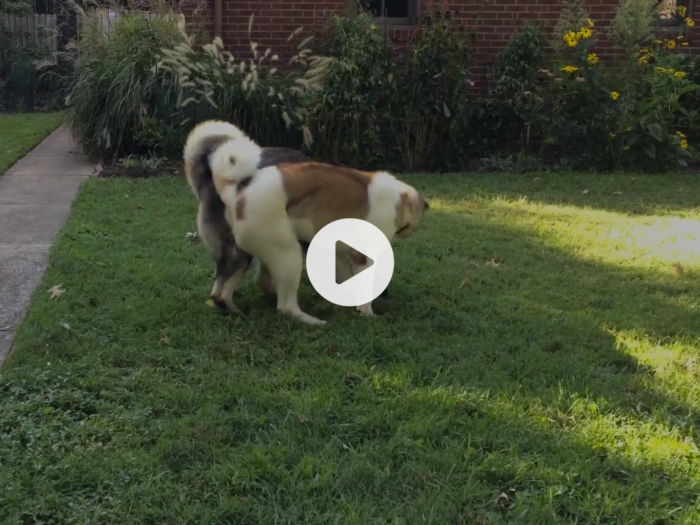
We’ve all seen intense behavior between dogs. Is it play? Fighting? Something in between? Here are two adult male Akitas acting wild. Are they happy or hostile? They look fierce, they’re moving at top speed, and their body slams are rude. Believe it or not, these guys are playing.
- They’re showing good give-and-take. Sometimes one chases, sometimes the other.
- Their bodies are curvy – not rigid.
- Their tails are relaxed – not tight.
- Their mouths are open and relaxed – and no hard bites.
- They both pause between jousts.
- That belly-up move? The dog that’s giving the other dog access to his tummy is saying, “I’m not worried about you.” Then he goes back to the game.
If you weren’t sure, you’re not alone. It’s just as hard to see a problem brewing before two normally “easy-going” dogs lunge at each other without warning. There’s always a warning, but we miss the body language until it’s too late. Stress signals can be quick and hard to spot. The dogs see them, though.
The next time you’re considering a group play opportunity for your friend:
- DO take the time to learn your dog’s body language so you can avoid or stop uncomfortable or dangerous social situations right away. Your pup will be safer, and you’ll both have a better time.
- DO choose your dog’s play friends carefully. Do they have similar skills? Does your pup know and like all of them – and their people? Do they like him?
- DO avoid group play in parks if you’re thinking he needs the exercise, or “it will be fun for him.” There’s a good chance he’ll be nervous and on edge. Over half of adult dogs DON’T want to play with dogs they don’t know. He’ll be happier and safer with you at home, with maybe a couple of known doggy friends.
- DO choose play places carefully.
- Avoid situations where you don’t know the dogs and owners. They’re risky.
- Avoid daycares that use corrections, squirt bottles, or cans of pennies to stop problems. They scare dogs and increase the chance of fights.
- ALWAYS monitor your dog’s group play. Interrupt with treats after a couple of minutes to calm the action. End the fun after 5 or 10 minutes depending on the dog’s age and ability. Go for a walk or play at home after that. There can be too much of a good thing.
Spry Dog can help you understand your dog’s body language. For more information, contact us: info@spry.dog
Sorry, comments are closed for this post.